MIC_Reaction_Dynamics_ROB_Alex_Lysakowski-5.jpg
MIC_Reaction_Dynamics_ROB_Alex_Lysakowski-12.jpg
MIC_Reaction_Dynamics_ROB_Alex_Lysakowski-1.jpg
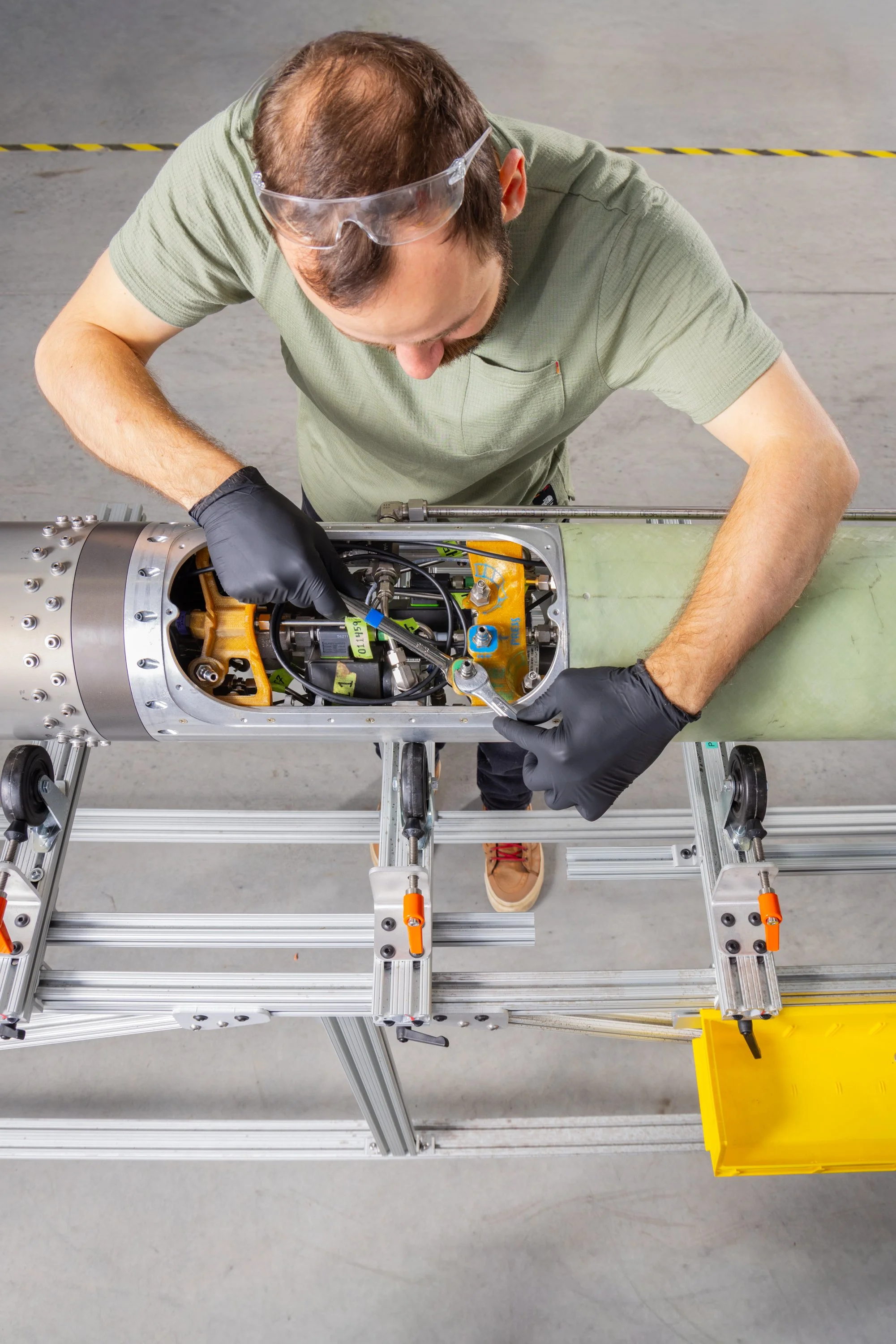
MIC_Reaction_Dynamics_ROB_Alex_Lysakowski-17.jpg
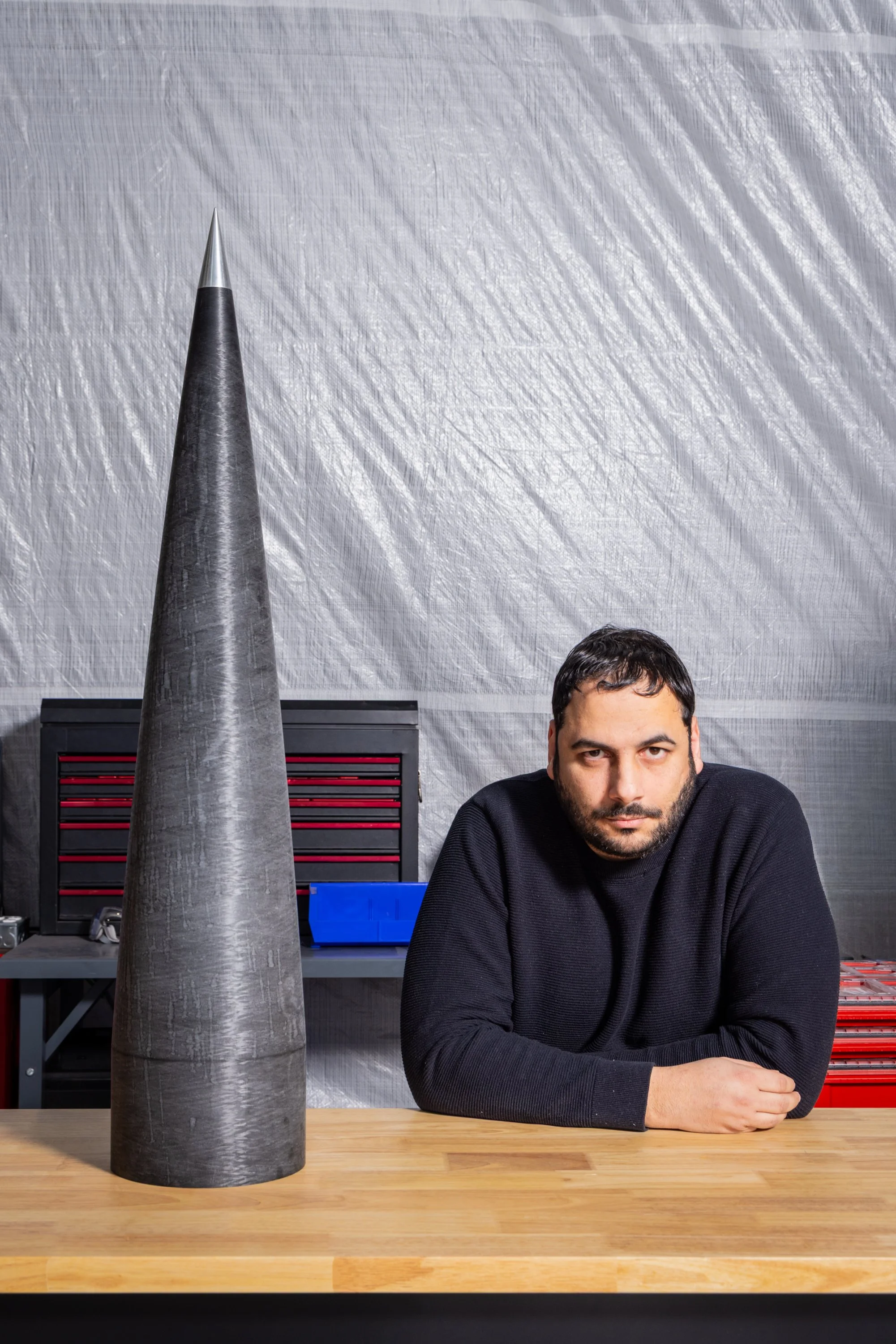
MIC_Reaction_Dynamics_ROB_Alex_Lysakowski-26.jpg
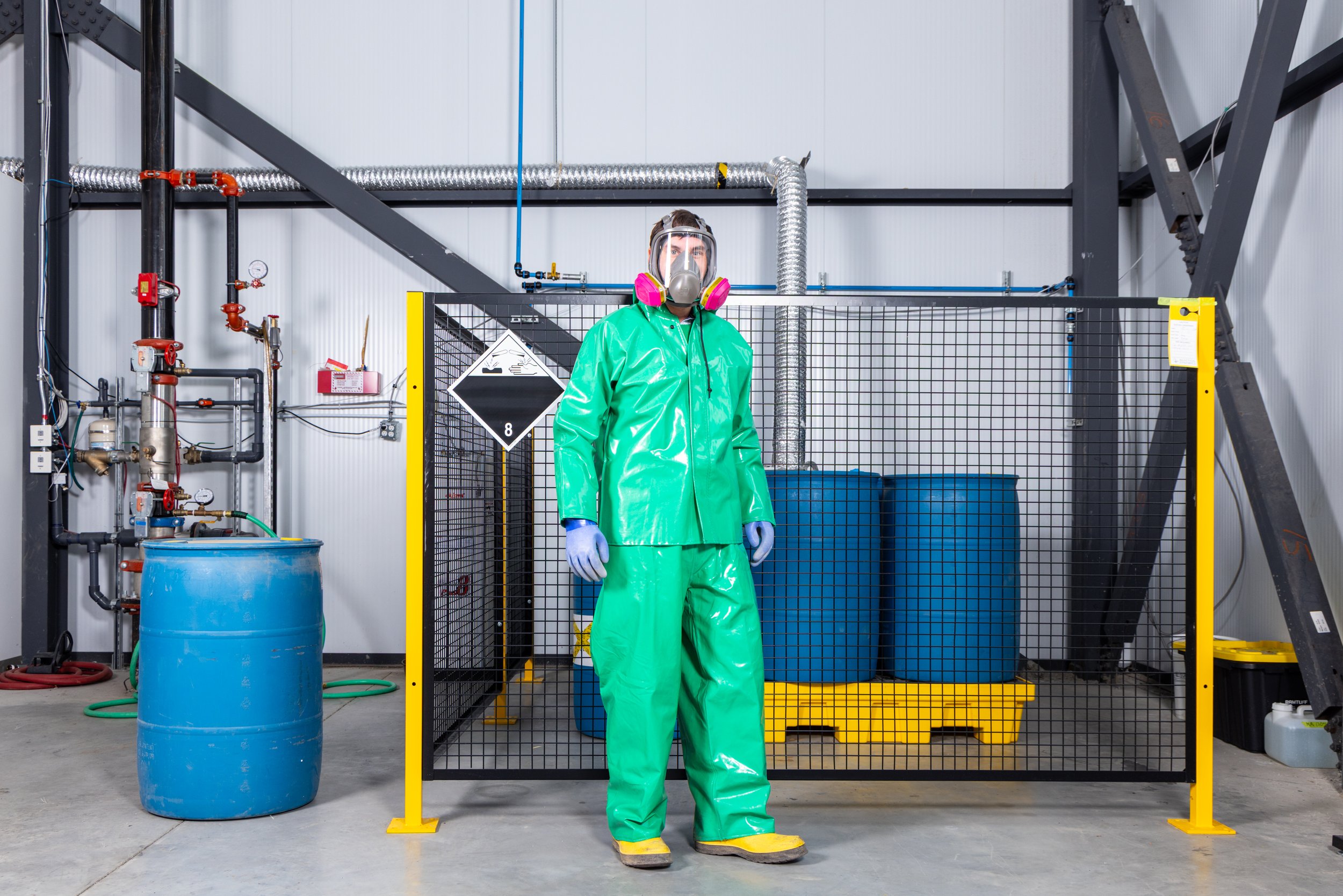
MIC_Reaction_Dynamics_ROB_Alex_Lysakowski-33.jpg
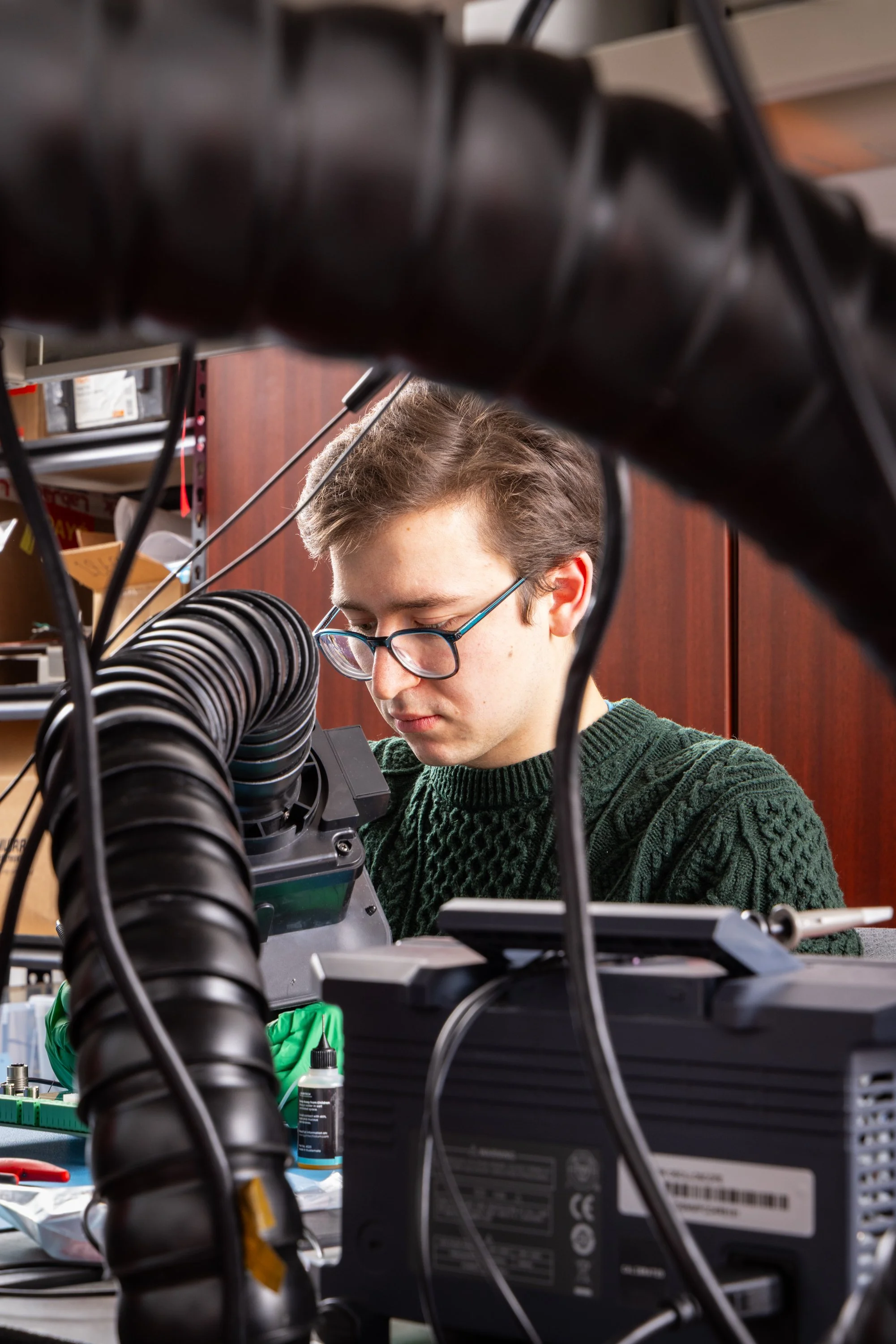
MIC_Reaction_Dynamics_ROB_Alex_Lysakowski-41.jpg
MIC_Reaction_Dynamics_ROB_Alex_Lysakowski-44.jpg
MIC_Reaction_Dynamics_ROB_Alex_Lysakowski-28.jpg
MIC_Reaction_Dynamics_ROB_Alex_Lysakowski-23.jpg
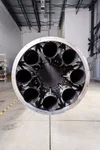
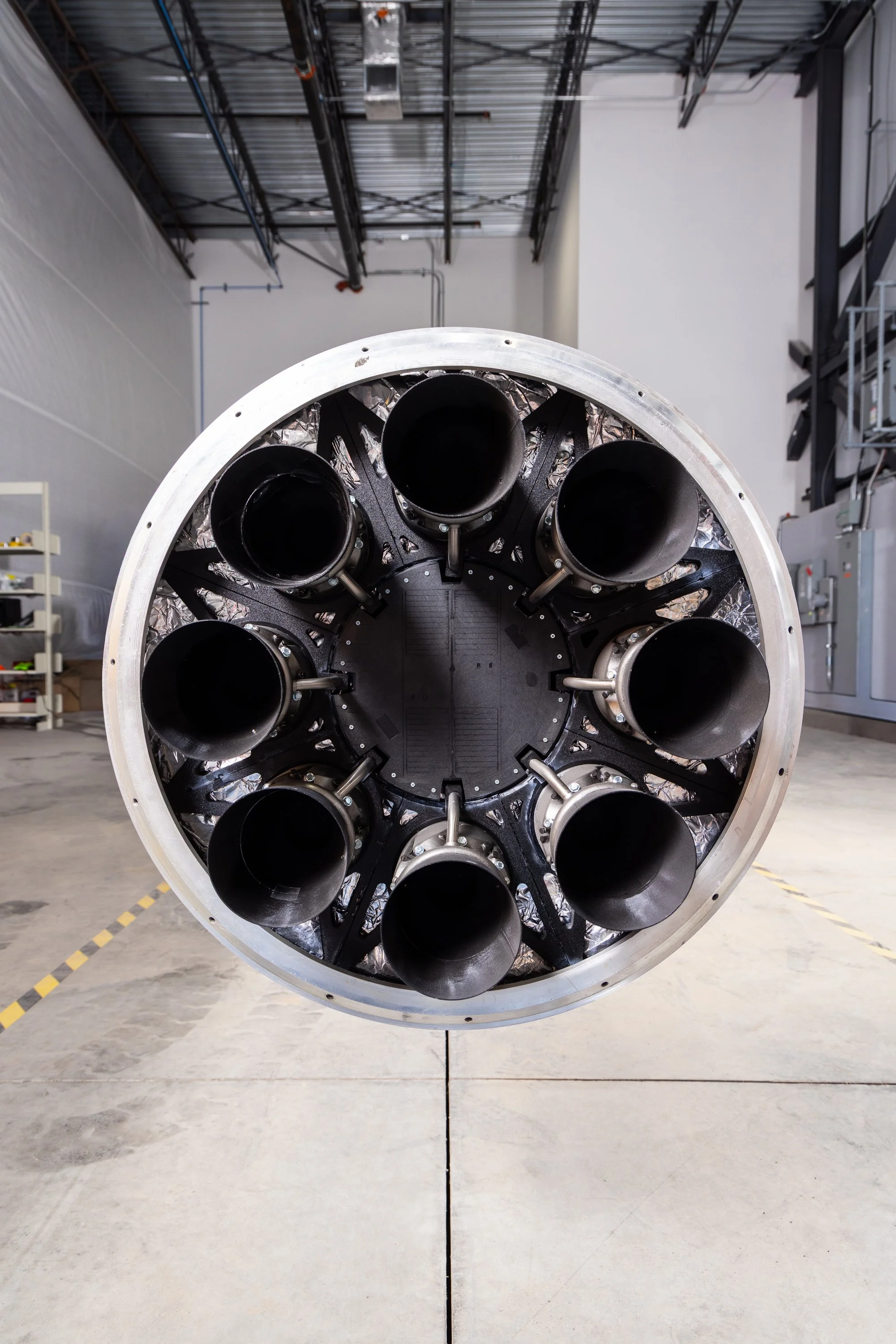
MIC_Reaction_Dynamics_ROB_Alex_Lysakowski-5.jpgAurora Rocket Housing: rear thurster moduel
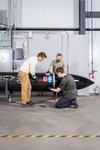
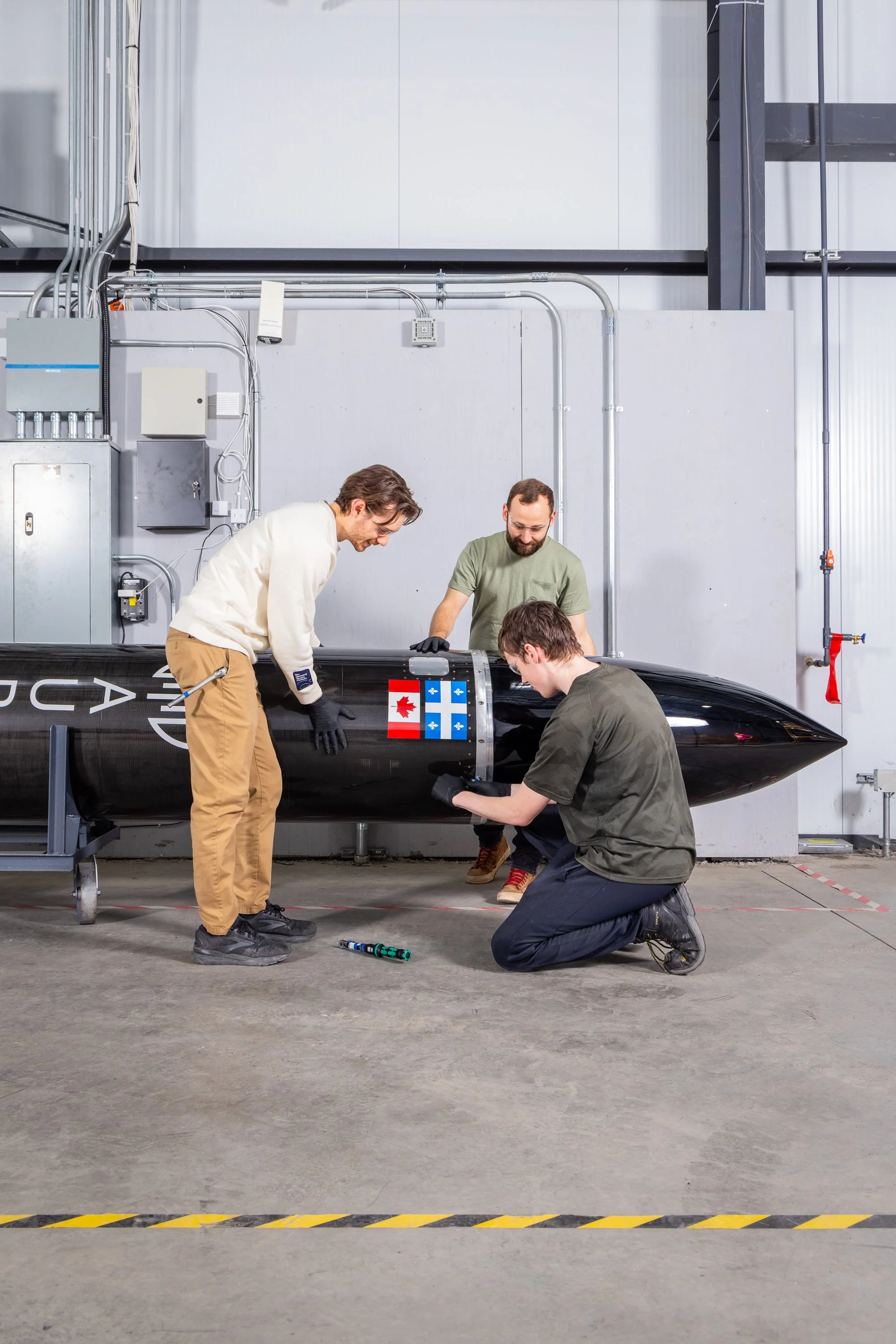
MIC_Reaction_Dynamics_ROB_Alex_Lysakowski-12.jpgAurora Rocket Housing:(left to right) Benoit Dumas- Mechanical designer, Maxime Goulet Bourdon- Operations DIrector, Caelan Babenko-Manufacturing engineer technician Inspect and fasten nose cone to rocket module.
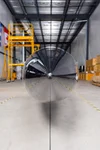
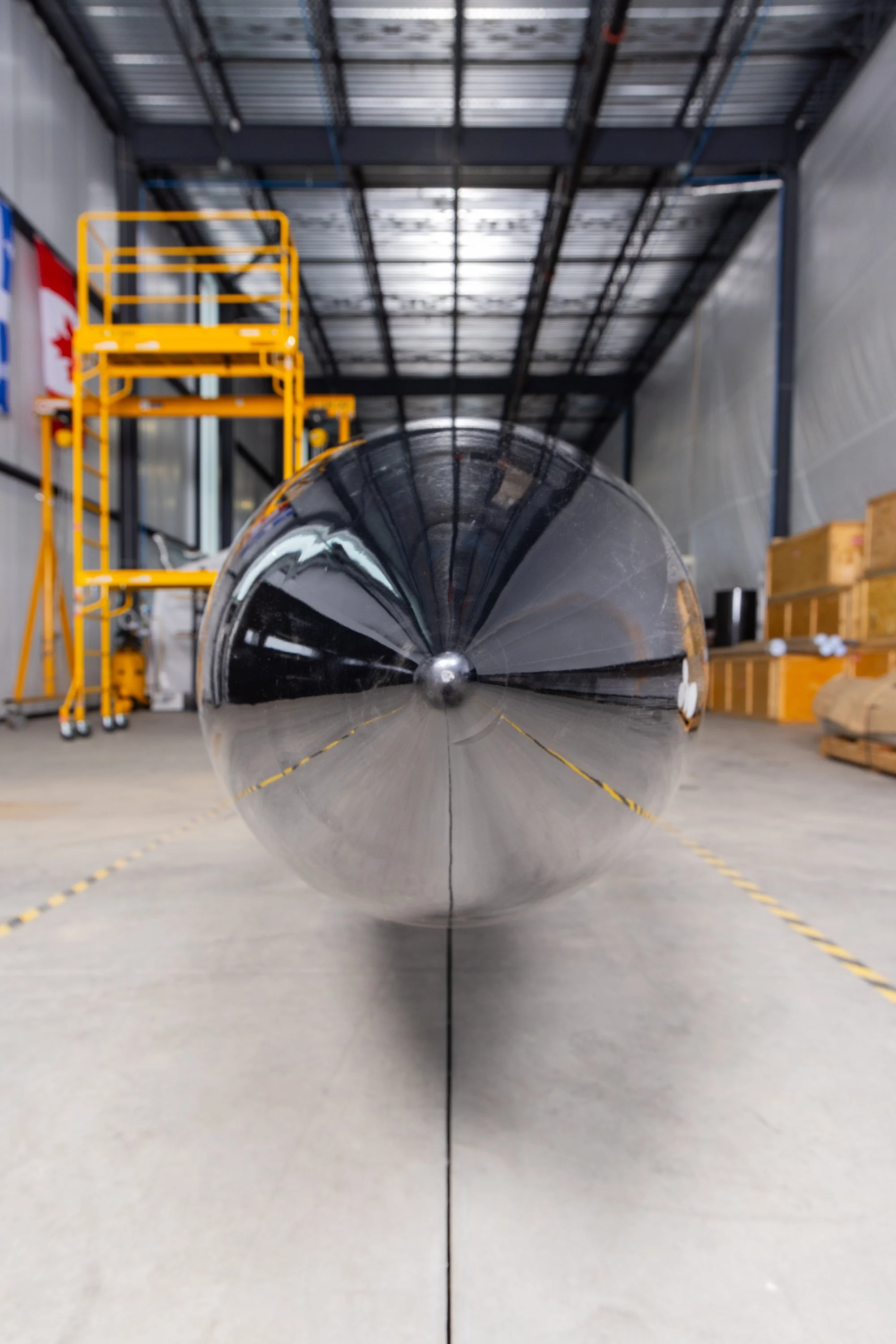
MIC_Reaction_Dynamics_ROB_Alex_Lysakowski-1.jpgAurora Rocket Housing (viewed from front): Reaction Dynamics is a Canadian aerospace company developing hybrid rocket propulsion systems for satellite launch applications. Their vehicles utilize a combination of solid fuel and liquid oxidizer, integrated within a modular architecture that includes precision-machined components, propellant delivery systems, and staged structural elements. Constructed from high-strength metals, polymer-based fuels, and thermally resilient materials, these systems are engineered to balance performance, reliability, and manufacturability for orbital deployment.
MIC_Reaction_Dynamics_ROB_Alex_Lysakowski-17.jpgMaxime Goulet Bourdon- Operations DIrector Secured and adjusts components of a hybrid rocket propulsion system, combining a solid polymer-based fuel with a liquid oxidizer. Unlike conventional air-breathing engines, rocket systems must carry both fuel and oxidizer to enable combustion in the vacuum of space. The interaction between these components generates the thrust required to propel the vehicle beyond Earth’s atmosphere.
MIC_Reaction_Dynamics_ROB_Alex_Lysakowski-26.jpgBachar Elzein- CEO and Technical Director holds the carbon fiber Rocket nose cone.
MIC_Reaction_Dynamics_ROB_Alex_Lysakowski-33.jpgMadison Van Herk- Fluid system designer, Standing in a chemical saftey suit. This image highlights safety infrastructure designed to manage reactive oxidizing agents within a controlled facility. Fire suppression systems, including water-based containment methods, are positioned to mitigate risks associated with highly energetic materials. The setup reflects stringent safety protocols governing the storage, handling, and transport of hazardous substances.
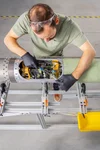
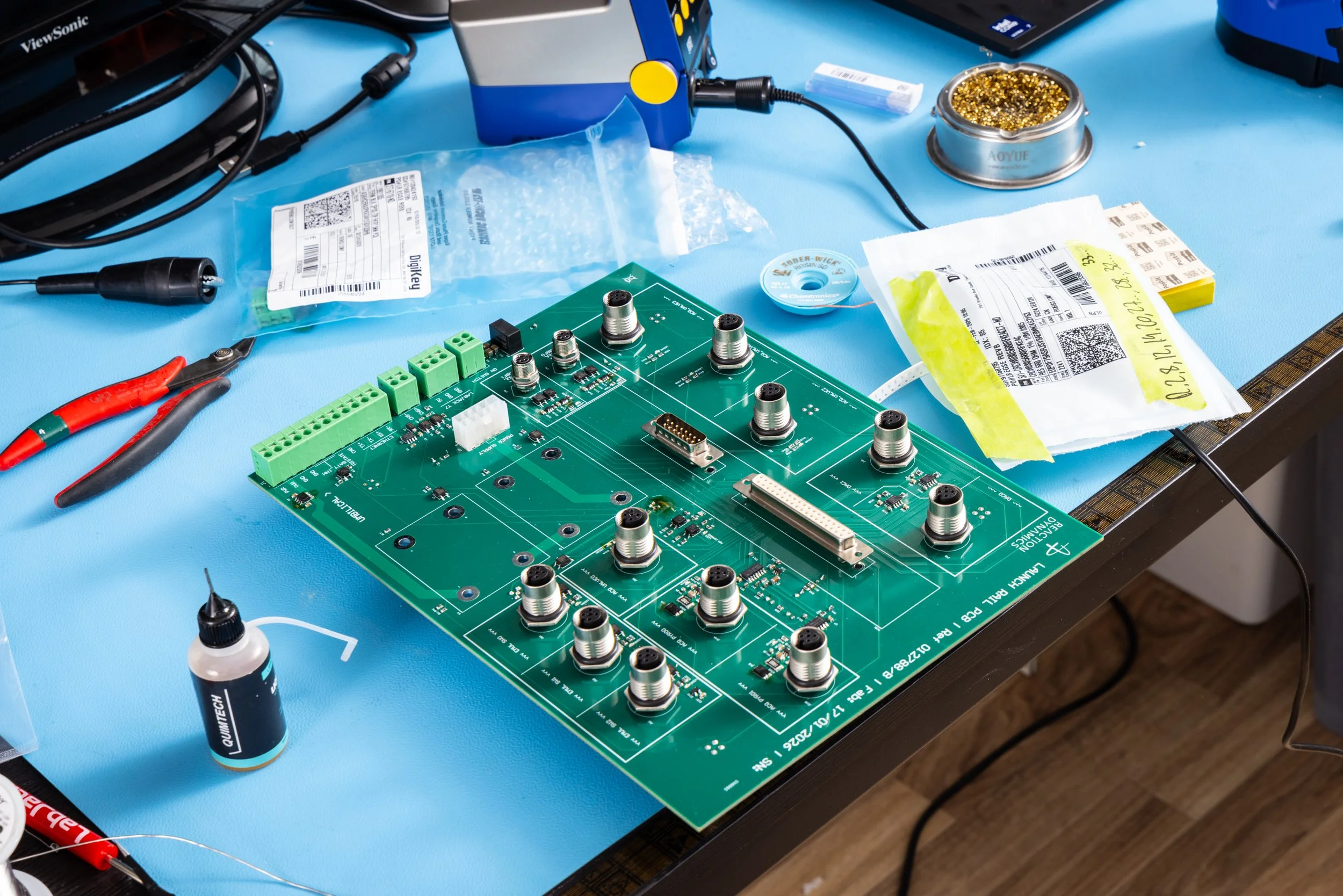
MIC_Reaction_Dynamics_ROB_Alex_Lysakowski-41.jpgMark Zavorotny- Electrical ground support equipment. Shown is a precision electronics assembly process, where circuit boards are constructed using both manual and stencil-based soldering techniques. This image presents an Electrical Ground Support Equipment (EGSE) interface board used to communicate with a launch vehicle’s onboard systems. The unit facilitates command transmission and data acquisition, enabling operators to control valves, monitor sensors, and prepare the rocket for launch. It serves as a critical link between ground systems and flight hardware.
MIC_Reaction_Dynamics_ROB_Alex_Lysakowski-44.jpgShown is a precision electronics assembly process, where circuit boards are constructed using both manual and stencil-based soldering techniques. This image presents an Electrical Ground Support Equipment (EGSE) interface board used to communicate with a launch vehicle’s onboard systems. The unit facilitates command transmission and data acquisition, enabling operators to control valves, monitor sensors, and prepare the rocket for launch. It serves as a critical link between ground systems and flight hardware.
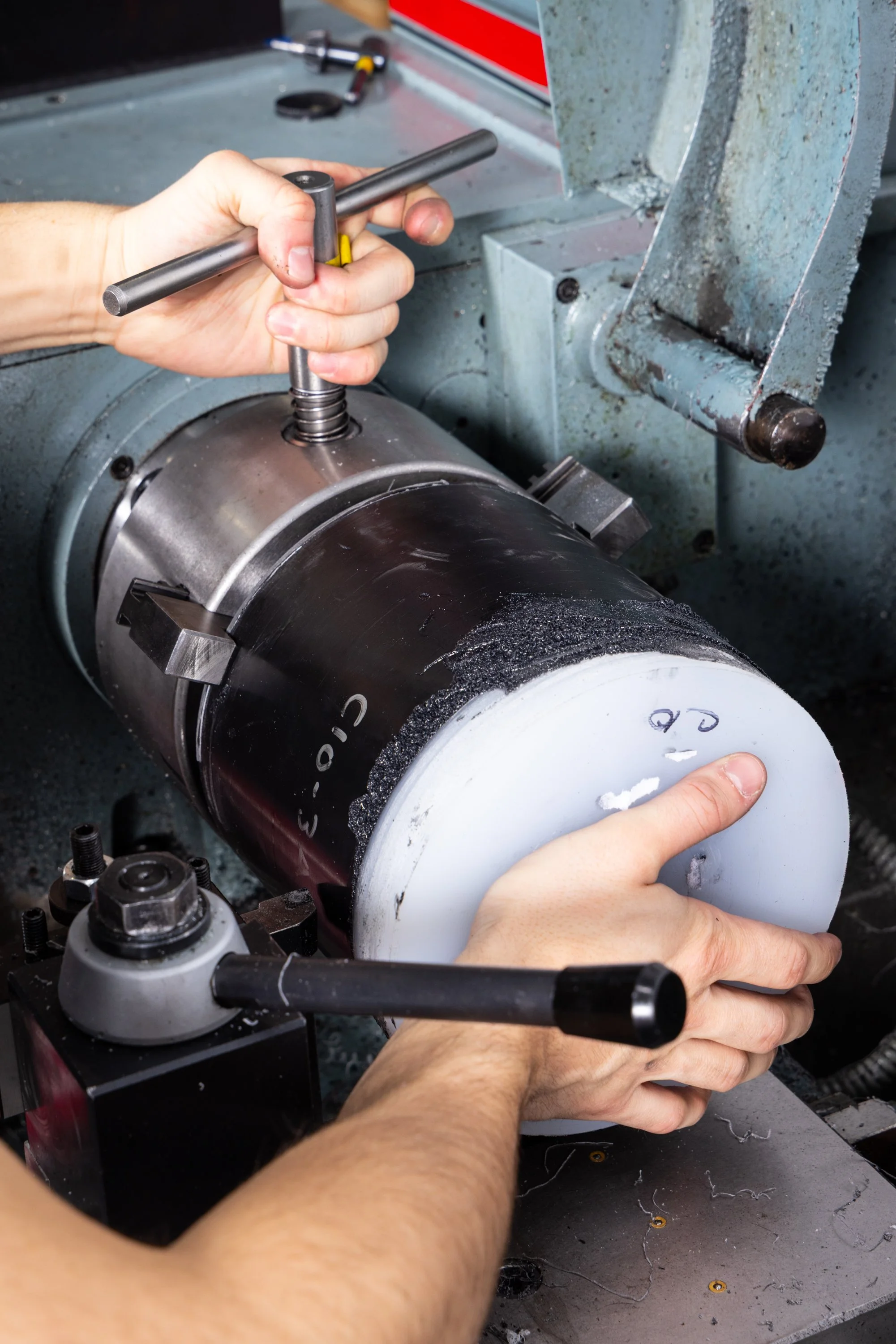
MIC_Reaction_Dynamics_ROB_Alex_Lysakowski-28.jpgJosué Croteau-mechanical engineering technician working at a machining lathe. This image illustrates integration of rocket fuel components with precision-machined hardware. The propulsion system relies on a combination of fuel and oxidizer to generate thrust, enabling operation beyond the Earth’s atmosphere. Fuel cylinders are machined down on a lathe to achieve exact dimensional tolerances, uniform wall thickness, and smooth surface finishes, all of which are critical for maintaining consistent burn characteristics, structural integrity under pressure, and proper fit within the propulsion assembly. This level of precision ensures reliable performance and efficient propellant flow throughout the system.
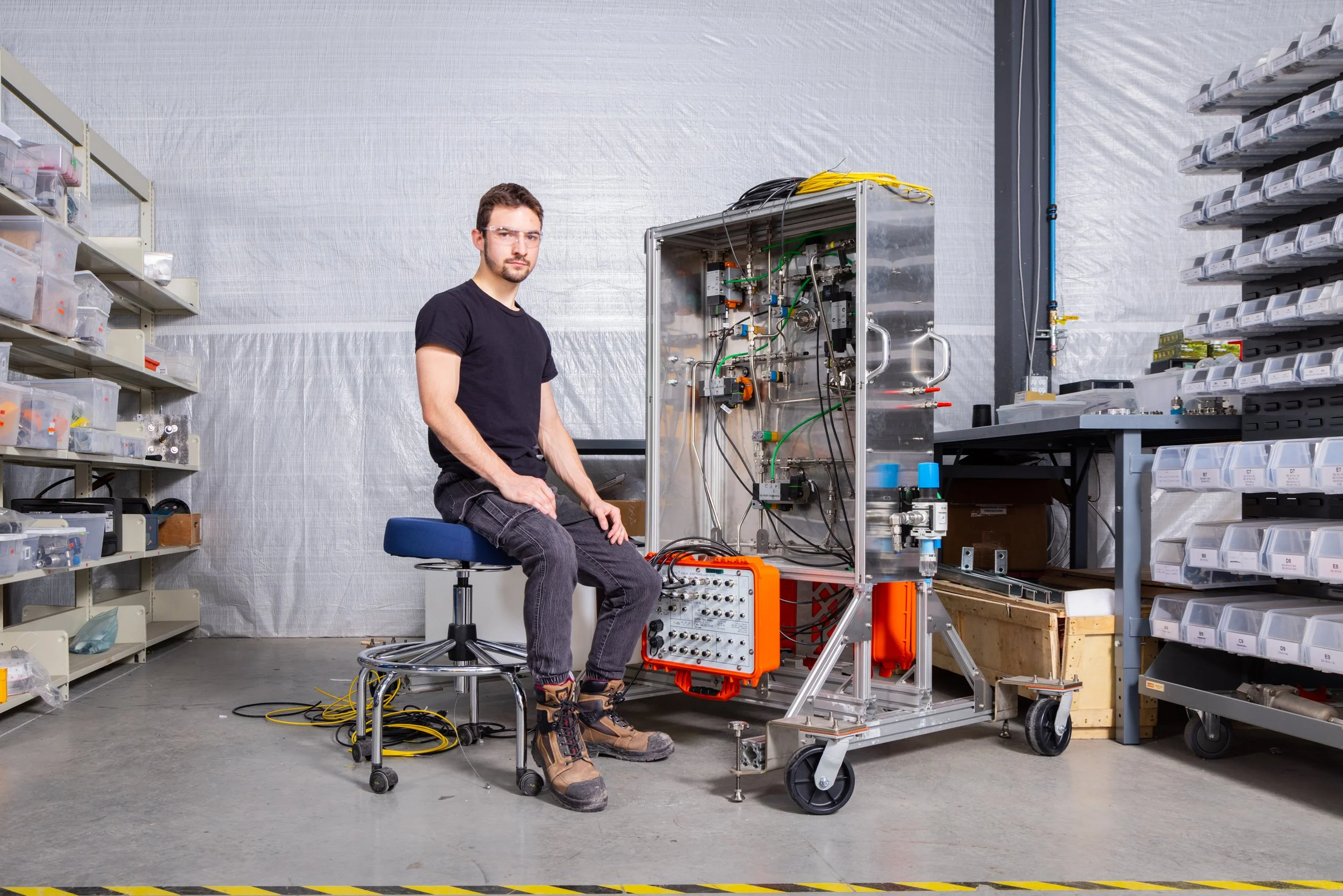
MIC_Reaction_Dynamics_ROB_Alex_Lysakowski-23.jpgJosué Croteau-mechanical engineering technician, preparing and working on a ground-based propellant loading system, commonly referred to as a fill cart, which interfaces directly with a launch vehicle during pre-launch operations. This system is responsible for delivering oxidizer, pressurants, and associated gases to the rocket on the launch pad. Designed for modularity and transportability, the equipment can be disassembled, shipped internationally, and reassembled on-site to support remote launch campaigns. preparing and working on a ground-based propellant loading system, commonly referred to as a fill cart, which interfaces directly with a launch vehicle during pre-launch operations. This system is responsible for delivering oxidizer, pressurants, and associated gases to the rocket on the launch pad. Designed for modularity and transportability, the equipment can be disassembled, shipped internationally, and reassembled on-site to support remote launch campaigns.
info
/
1
2
3
4
5
6
7
8
9
10
·
·
·
·
·
·
·
·
·
·